CORE TECHNOLOGY
QTing builds a Core Technology platform around deep learning AI algorithms and self-developed optical modules, making complex defects clearly visible and precision quality accurately quantified.
01 /AI algorithm technology
AI dual-modal learning makes complex defect recognition more stable
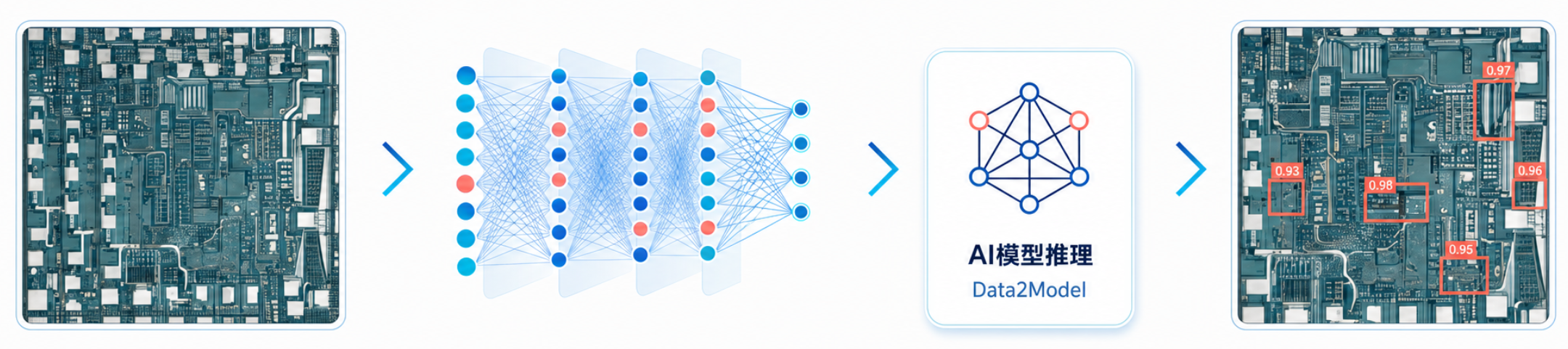
Integrating bad sample training and good sample training can not only accurately locate and classify known defects, but also discover under-expressed anomalies and new defects.
Data organization, model training and rapid deployment are completed through the Data2Model tool chain, maintaining a high detection rate and stability when samples are limited, and reducing data collection and labeling costs.
Adopt cascade detection and incremental learning mechanisms to automatically accumulate difficult-to-identify defect samples and continuously optimize the classification model; Dynamically adjust the abnormality determination threshold based on detection data.
Practical cases of precipitation detection and experience in process and material defects, combined with reasonable rule optimization technology, improve the detection efficiency of complex products, complex surfaces and mass production scenarios.
Covers general algorithms such as classification, segmentation, target detection, OCR, and anomaly detection to meet the needs of complex defect identification and quality determination.